For those of you who only know me from this blog, or have met me within the past two years, you may not know that about three years ago, I had a pretty severe weight problem. That may be putting it mildly. Today I weigh about 220 and have (according to a very unscientific guess from my doctor) about 12-15% body fat. Three years ago, I weighed... well, to be honest I don't really know. The scale at my gym, which was actually designed for commercial bakers, only went up to 450 pounds, and I topped it out when I started my weight loss program. I can tell you that my pants were 60" in the waist. That's five feet.
I am one of the lucky few; I am a person who has been heavy all of his adult life, who has managed to lose weight and become physically fit. Heck, I'm downright athletic!
Not to overplay this, but it has taken a bit of a commitment from me. I've sort of developed into a bit of a "gym rat" and I definitely am more conscious and careful about what (and how) I eat. Now, I'm not one of these guys who lives to work out. I'm not one of these "muscle-heads" who is obsessed with talking about his
lats,
gluts,
pecs and/or
delts. I am a bit of a food-snob (I've always been a picky eater), but I don't go around imposing my "food-beliefs" on others. Some people at work may dispute this, but I have always maintained that at lunch they are free to go where they want, I am free to go with them or decline.
The upside of this, and the reason for this post, is that because of my new-found health and my interest in working out and nutrition, a lot of people ask me for advice. I really don't mind sharing. Anybody who's asked me knows that I can, and do, talk at great length about these things when prompted. In fact, I tend to spout information so fast that I think some people are overwhelmed.
So, I decided to go ahead and write a post about this. That way anyone who is interested in my advice, but not interested in talking to me can benefit! :)
I am not a nutritional anthropologist (disclaimer)
I am not a trainer. I am not a nutritionist. I am just a guy who, with a lot of help, lost a lot of weight. I could not have done this without help from my trainer and my nutritionist. If it weren't for them I would still be eating nothing but lettuce and wondering what those bars with the round black things on the ends were for. So, no; I will not train you. Don't even ask. I am more than happy to refer you to a trainer if you like. Don't ask me to define a diet plan for you. I won’t do it. I have lost touch my nutritionist, but if you are really interested I can ask around and find a good nutritionist for you.
Step one: Don't get fat
The reason I am not on TV hawking sandwiches, or writing an "inspirational" book about my "ordeal" that will soon be a cable movie of the week is because, aside from the fact that no one has asked me, I am more than a little bit embarrassed that I got as fat as I did. I wasn't at the time, at the time I just didn't care. But now that I look back, I realize I wasted a lot of years of my life, and it sucks. The other reason is that I am fully conscious of the fact that I did it to myself. McDonalds didn't twist my arm. No one from Häagen-Dazs came to my house and held a gun to my head. I choose to eat that way. I choose not to be physically active. And I'm sorry if this rubs you the wrong way, but if you're overweight there's a good chance you did it to yourself too.
If this step didn’t go as planned, read on.
Food is your friend
The first thing I had to learn was how to eat to lose weight. Most people think that just cutting out in-between meal snacks and eating less is the way to go. It makes sense; less food, less fat. That’s only partially true;
Increasing your metabolism is really what all this food-management (don’t call it a diet!) and exercise amount to. They are ways to increase your metabolism so that you burn calories all the time. If you don’t eat enough, or often enough and the food you eat has dubious nutritional value, your body begins to think its starving. Your body, smart device that it is, is always looking for ways to preserve itself. If you really were starving, your body would conserve fat and ratchet down your available energy to conserve resources. To change this you need to:

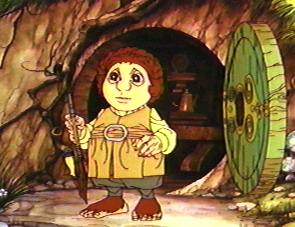
Eat like a Hobbit. I eat six to seven meals a day. Breakfast, mid-morning snack, lunch, after-lunch snack, pre-dinner snack, dinner and bed-time snack. The idea is to keep the body burning food. This increases your metabolism.
Pay attention to what you eat. These are not huge Sopranos Sunday dinner type meals. They are just little thing I can eat leisurely in five to ten minutes. An apple. A yogurt. A protein bar. A small sandwich. I generally eat a little more at lunch, since I find the energy helps keep me going in the afternoon. I generally try to eat as much whole or organic food as possible. Frankly, I think the organic food tastes a little better. I try to keep carbs in general low and I try to keep out as many highly-processed carbs (sugar, white bread and pretty much any mass-produced “junk-food”) to an absolute minimum. Some fruit (especially earlier in the day), some dairy. Vegetables are always good since most have very few calories and are pretty filling, just don’t dunk them in butter or ranch dressing and absolutely don’t dip them in batter and deep-fry them! Protein is important since it’s what your body uses to build muscle (more on that later). Also, you have to have some fat. Your body needs fat. It uses fat to create skin cells, create hair cells and regulate you hormonal levels. This probably explains why so many of those people on low-fat diets are so moody. Vitamins A, D, E and K are all fat soluble, so if you don’t eat fat, your body’s ability to absorb them is limited. There are good fats and bad fats. Olive oil and canola are good. Using a little butter is OK. Using a whole stick a day is not. Margarine, besides tasting horrible, has trans-fats, which doctors say are “bad.”
Try to eat a lot of fish. Especially “fatty” fish like salmon and tuna. It has a lot of protein and the Omega-3 fats in fish are the “good” cholesterol. Chicken is a good source of protein as well. Beef is good, but does have a lot of [bad] fat, so I try not to have more than four or five servings a week. Same with pork. Buffalo, which is now available in most super markets it a good option. It tastes the same as beef, but has a lot less fat. But, you have to be careful. Less fat means that you have to watch how you cook it; it’s very easy to dry out if you’re not careful.
Now the fun part. I stick religiously to this food-management plan. However, as part of it, every fourth day I have a “cheat” or “off” day. This is when I can indulge. Generally, I have one cheat on this day. But, if I am finding that I have been plateauing for a while, I will have one day where I “cheat my ass off.” This usually “un-sticks” me and I start losing weight again. So, it’s not “I can never have cake and ice cream again.” It’s “I just can’t have cake and ice cream right now.” This has helped in a lot of way. Like I indicated, it has helped my body stay in the fat-loss phase and not plateau. It has also saved my sanity; I don’t think I could live in a world without ice cream.
You are going to have to work out
You can’t loose weight and get in shape by ONLY dieting or ONLY working out. You have to do both. It’s a binary system, and one with out the other is a waste of time.
My workout regimen is divided into two area; cardio and weight training. Again, it’s a binary system and you really need to do both. I work out six days a week, doing three days of each.
Before doing any exercise, I warm up for five minutes on the treadmill, and stretch for ten. I’ve found that this actually does help me perform better when it’s time to start my workout proper, so I almost never skip this step.
Cardio is important because it increases your lung capacity and your heart health. It increases your energy. It helps your body transmit oxygen to your muscles faster. It lowers your blood pressure. It increases your red blood cell count, which also helps the movement of oxygen through the body. It also burns a lot of calories quickly. I try to do at least 30 minutes, three times a week.
Running or jogging is a good cardio exercise, and the one I enjoy the most. Of all the cardio I do, this is one of the top calorie burners. You have to be careful with it, as the impact on your knees can cause on-going issues. Because of that I did not run until I was less than 220 pounds and I only run one day a week. I’ve tried running more than that (against my trainer’s advice) and my joints paid for it.
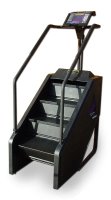
The stair mill is another exercise I try to do every week. I do it because it is a very intense workout with not a lot of “joint impact.” I dread it because it’s the longest 30 minutes of my life. It’s grueling. It’s boring. It will tire your legs out in ways I cannot describe with just words. But, like running, this burns a lot of calories. I’m also very happy when it’s FINALLY over, but that may just be the endorphins talking.
The other big cardio thing I do is the “cross trainer.” This is a lighter workout than running or using the stair mill, and has almost zero impact. You don’t burn as many calories. This is basically because no machine, or none that I’ve found anyway, are able to reliably keep a pace and resistance level that's not too hard and not too soft, but juuuust right. I usually do this in between running and stair milling days as a mini-break.
I do not like the elliptical. I’ve yet to find one of these that had a stride I feel comfortable with. I also do not like bikes. Unless your in a spinning class with Barbie the blonde 90 pound fitness-dominatrix yelling at you to “Go faster, you p***y!” it’s too hard for get a really intense workout. Since you can sit, your legs don’t have to support your weight, so you’re really not working a big enough muscle group.
Then there are weights. You have to lift weights, there’s really no way around it. The best thing you can do for long term weight loss, and metabolism boosting, is to develop some muscles. You don’t need to build big Ah-nold muscles, but you do need to tone and develop what you have. The fact is that cardio will burn calories while you are doing it. Increasing muscles mass, even just a little or at least toning and developing the muscle mass you already have will burn more calories throughout the day. The body needs to burn more calories to maintain the muscles, and it needs to burn them constantly. Hence the multiple small meals throughout the day.
You may say you don’t want to do weights. They are boring, they are hard. You may not want to get "big." True, sometimes that can be a little boring. If that’s the case, get a workout buddy. Or get an iPod. Or go to a gym that has a TV and watch that while you lift. If you are finding it too “hard” to lift, look at what you are doing. You are probably either using incorrect technique or too much weight. If you go to a “large corporate gym” there are usually trainers milling around (trying to drum up sales) who you can ask for a couple minutes of advice. If finances allow, you might even want to sign up with one for a few sessions to help learn the proper way to lift. But lifting is important, so don’t skip it.
So now the question is free weights or weight machines. Weight machines are generally easy to use, safe and will help you with your technique. The problem with machines is that if you are too tall, too short, too wide, have longer than average extremities or just plan don’t “fit” in the machine, it can be a little tough. Machines also don’t allow you to work the “stabilizing” muscles that free weights do (they are the muscles that make sure when you press you are controlling the weights). Also, over time your body can learn how to “cheat” the machine, meaning you can be lifting more and more, but your body has found a way to off-load some of the work, either to the wrong muscle group or to the machine itself via momentum and leverage. Machines also don’t give you a lot of flexibility.
Free weights are a little tougher to use. You have to have some idea what muscle group you want to work, and what type of exercise will do that. You have to know how to do that exercise correctly and safely. But, free weights give you a lot more flexibility in your work outs. They also require you to use those stabilizing muscles and reduce your bodies ability to “cheat” (assuming you are using correct technique) Muscles tend to develop faster with free weights, and if you want to “go big” using free weights generally allow you the option of lifting more weight than a machine (most upper body machines I’ve seen at the gym “top out” at some point).
I use mostly free weights. There are a few things that are still just plain easier with a machine, but not many that I have found.
A few final things about weights:
Work all your muscles groups. Don’t be “that guy” who just goes in and does nothing but bench presses or curls. Sure, his arms and chest may be strong, but he’s got a gut, and he’s wearing that weight lifting belt because his back is practically too weak to support his own body weight. The major muscles groups are legs, abdominals, chest, back, shoulders and arms. Work all of them. Even if you think you don’t have to, you should. I know a lot of people will say “Well, I just want to lose a few inches around my waist, so I’ll just do abdominal exercises.” The problem with that is that “spot-reducing” doesn’t work. To get energy, your body is going to burn fat. Fat is released through the blood, so the particular muscle group you are working doesn’t care where it comes from. The body, being very efficient, is going to use that fat that is easiest to liberate. This is always that fat that was stored last. The body also will try to keep the fat as close to your core as possible (again, making it easy to get to) so you will first notice fat loss in your hands and feet since this was the fat usually stored last. So, you can do all the crunches you want, the bottom line is that your waist will still be one of the last places you body takes the fat from.
It’s not a race. The object isn’t to lift as fast as you can. That’s not going to get you anywhere; it’s all physics doing the work at that point. Muscles development occurs by utilizing resistance over time. By going fast, you are reducing your time to almost zero. What is zero times any other number? Zero.
It’s important to eat after you work out (weights or cardio). You should try to eat something within an hour. This is because for the hour after you finish, your body will not release insulin in response to an increase in blood sugar. Insulin is one of the hormones that promote fat storage, so without it more energy goes directly into the muscles.

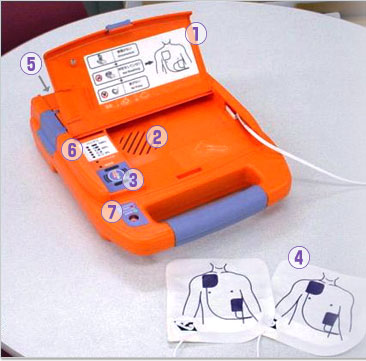
One final thing about exercise in general; know your limits. Just this past Friday a man died at my gym playing racquet ball. I didn’t know this guy personally, but I know that that whole group of guys was very competitive and would often push themselves beyond a healthy point. Last week was a worst-case scenario of what can happen when you overdo it. Don’t let it get that far. Don’t count on the gym staff to be able to do effective
CPR, most are woefully under trained. Don’t count on your gym to have an
Automated External Defribulator. Even those OSHA requires they have one, most don’t. Be careful and don’t over do it!
Well, that’s pretty much it. Again, I can’t say that this is going to work for you, but it worked for me. I can say that you have a better chance to lose weight by eating better and exercising than you do eating sandwiches or taking “herbal” diet pills. The key is to stick with it and don’t get discouraged. It may take a little while to start seeing results, but you will.
Good luck!





 Subscribe